


Bio
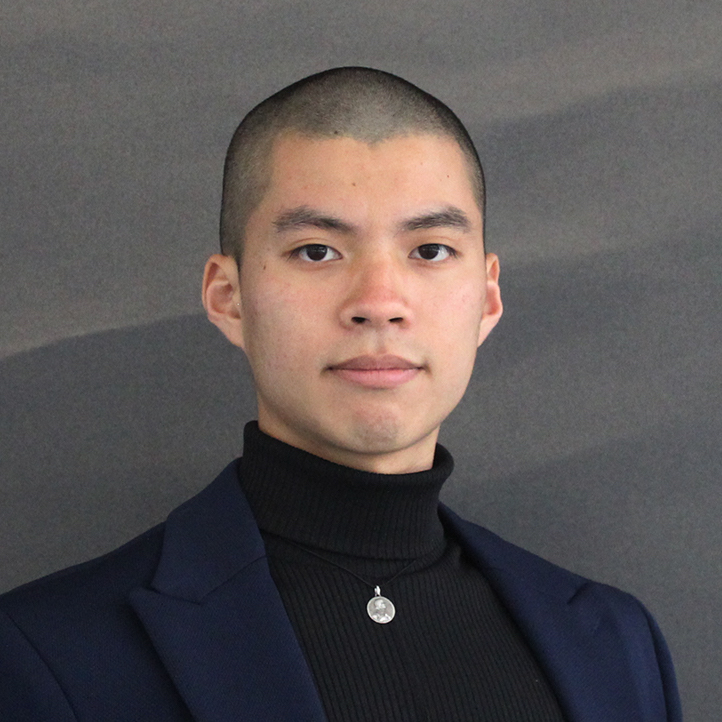
Maximilien is an Architectural Designer at MGA Partners and recipient of the 2026 John Stewardson
Memorial Fellowship in Architecture. He holds a Master of Architecture from Rice University, where he
was a Fondren Fellow at the Spatial Studies Lab and worked at the GIS/Data Center focusing on
urban spatial data analytics. He has worked in design and research offices in Houston, New York, and
Philadelphia, including a research fellowship at Gensler examining the future of cities and urban
design.
He has contributed to community climate justice toolkits, as well as design publications such as
STOÀ, URBAN Magazine, Paprika!, and Room One Thousand. He served as co-editor-in-chief for
PLAT Journal in 2023 and provided editorial assistance on Albert Pope’s Inverse Utopia: Urbanism
and the Great Acceleration (Birkhäuser, 2024). Since moving to Philadelphia, he has frequently
served as a guest critic for design studios at Drexel University, Temple University, Thomas Jefferson
University, and the University of the District of Columbia.
Previously, he earned his BA from Wesleyan University, double-majoring in Political Science and
Urban Studies with a minor in Integrated Design, Engineering, and Applied Sciences.
Interview
Q | What sparked your interest in becoming an architect? Earliest Memory of Architecture?
A | Growing up, I didn’t know any architects or much about the profession, yet I was deeply intrigued by
how built environments affect human behavior, sociability, and everyday exchange. Especially in
francophone creole cultures, there is the concept of le vivre ensemble (“living together”), which has
served as my moral and vocational compass for social impact.
Because I have always loved the tactility of craft and making things with my hands, architecture
school felt like a natural fit. My earliest memories of architecture as a discipline began when I enrolled
in an undergraduate architecture program in South Africa. I eventually took a detour to study political
science and urban studies, knowing I wanted to return to design with a deeper understanding of the
social, cultural, and political-economic forces that shape cities.
Q | What type of advice would you offer to young professionals or even younger people
considering going into architecture as a field of study/career pursuit?
A | Architecture is a vast, endlessly fascinating discipline with room for almost any curiosity the beauty
of the profession is how deeply you can make it your own, and there is a niche for everyone. If you
are drawn to it, follow that passion wholeheartedly, paired with prudence. Inform yourself about the
realities of the profession early on, including the investments of time and education, financial returns
and sustainability, and how the field is inevitably evolving with AI. Balancing your life with these
implications will matter just as much as design fulfillment alone. There are free online resources
published by the AIA to guide you on these matters, and you should always reach out to people in the
architecture community to learn from their experiences.
Q | In your “spare time” do you pursue any interesting hobbies or extracurricular pursuits?
A | In my “spare time” I fence at Fencing Academy of Philadelphia/Philadelphia Fencers Club and
compete at tournaments in the region. I also recently started dancing Lindy Hop at Philly’s Jazz Attack
which is a wonderful community.