



Century-Old Pittsburgh Building Transformed Into Health “Home-Of-The-Future”
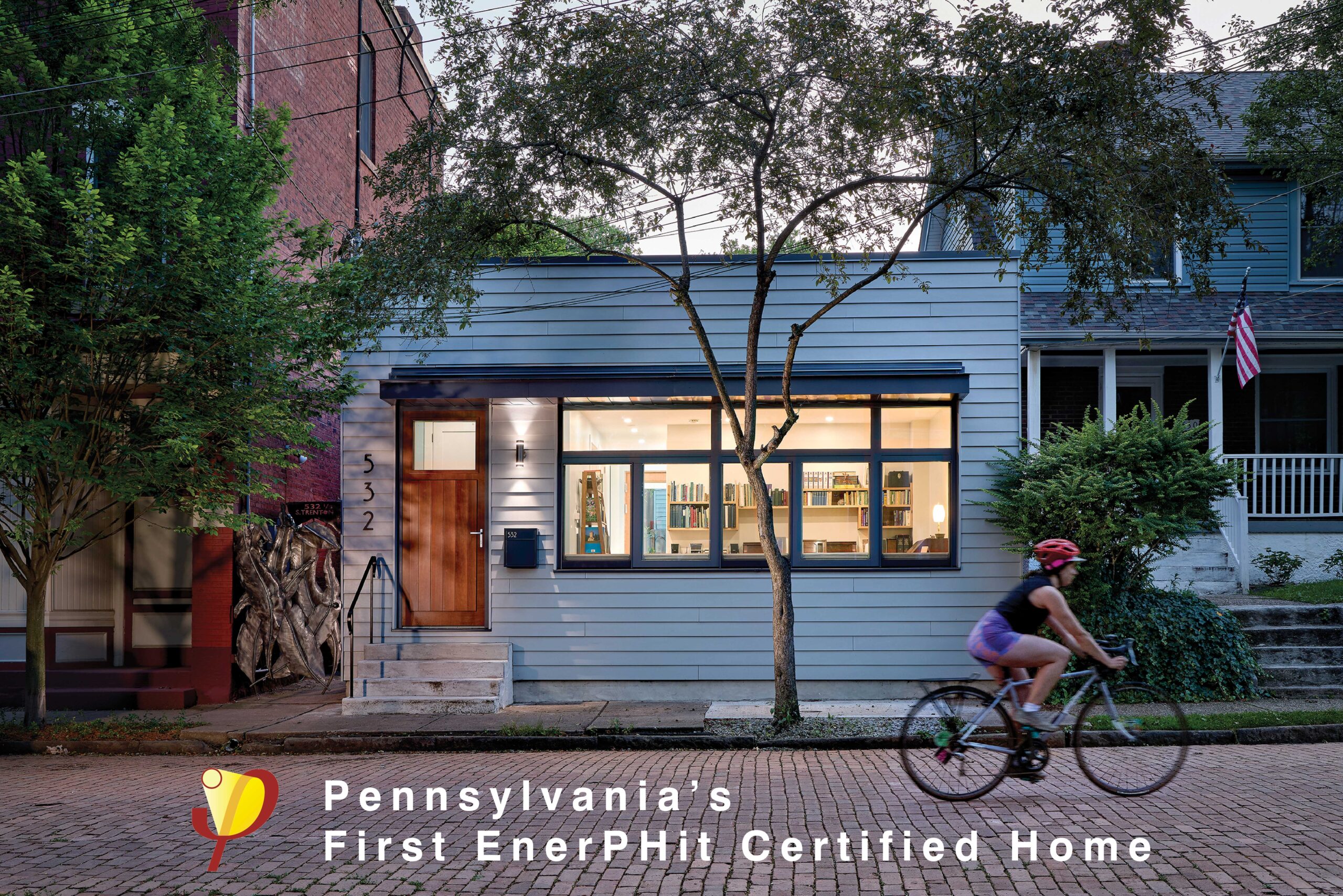
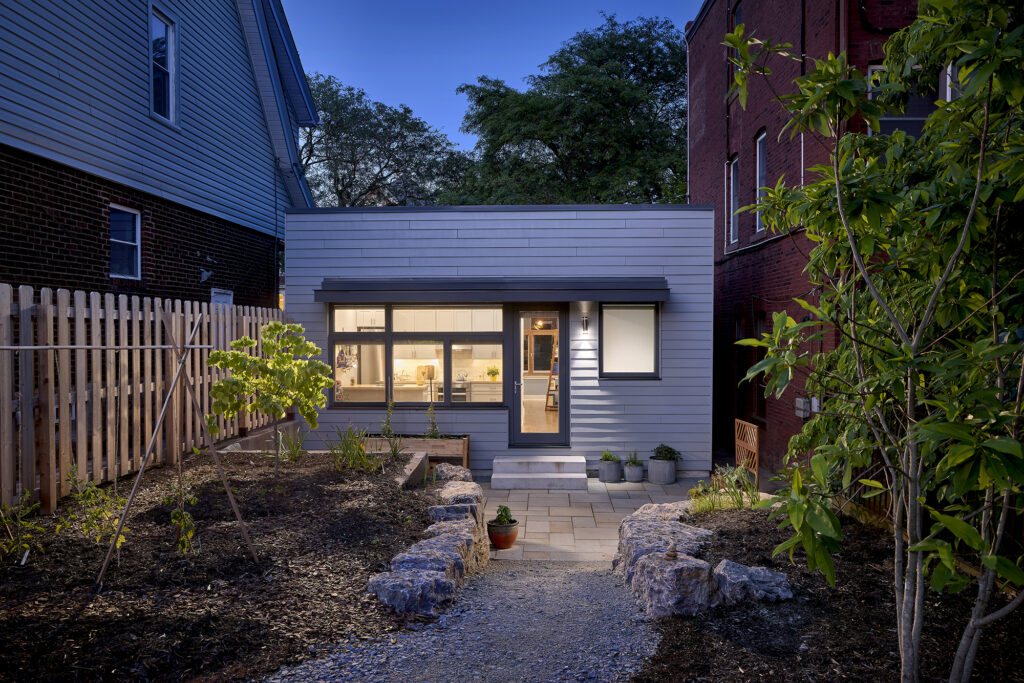
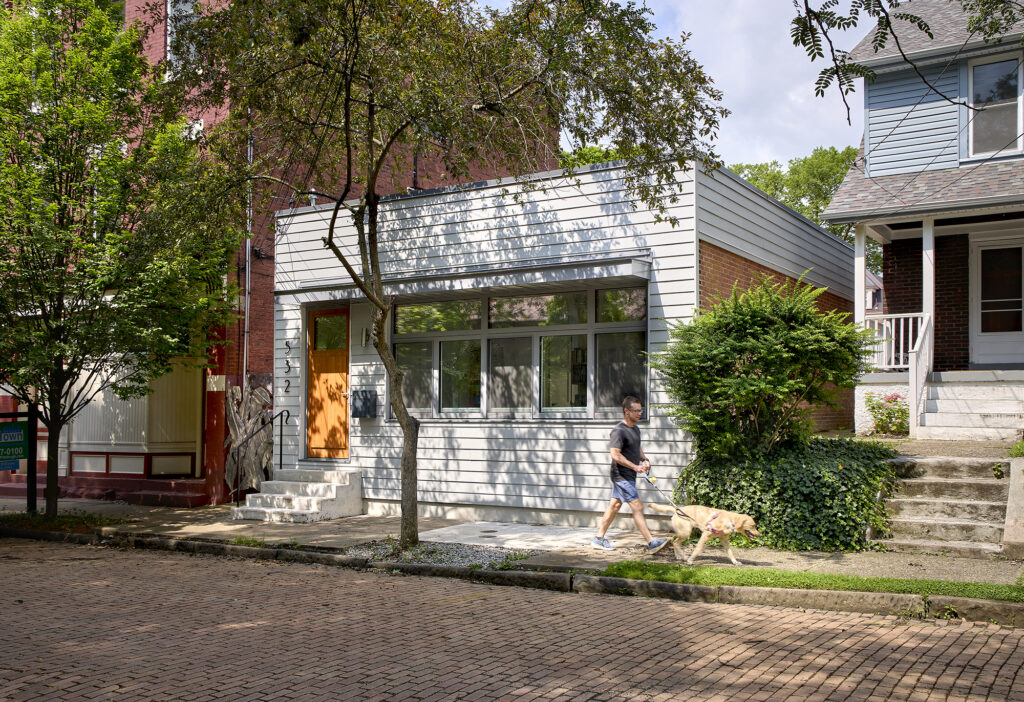
PITTSBURGH – A quiet block in Regent Square now has a milestone architectural distinction, courtesy of Studio St. Germain: it is the site of the Wilkinsburg Residence, the first single-family residence in Pennsylvania—and only the 5th in the country—to earn a Passive House EnerPHit certification.
Created specifically for existing structures, EnerPHit is the highest certification standard for deep energy retrofits of existing buildings, and is awarded for the highest ratings in energy efficiency, thermal insulation, improved air quality, and resilient construction. It is created and administered by The Passive House Institute (PHI), which is an independent research institute that played a major role in the development of the Passive House concept. Passive House is the only internationally recognized, performance-based energy standard in construction.
For Sewickley-based Studio St. Germain, which specializes in high-performance design and healthy architecture, the Wilkinsburg Residence represents a unique blending of sustainability and wellness. “We are proud to have designed the first single-family residence in Pennsylvania to earn an EnerPHit certification,” said Nathan St. Germain, Principal and Founder of Studio St. Germain.
“The Wilkinsburg Residence combines two of our guiding principles: building to give back and improving lives. A passive house is not only energy efficient and sustainable, but it also has a positive effect on its occupants.”
According to the Passive House Database, which tracks passive house construction across the world, the Wilkinsburg Residence is only the fifth EnerPHit-certified single-family residence in the entire United States, underscoring how difficult such a distinction is to obtain. Receiving an EnerPHit certification means passing a stringent performance-based process that measures several key metrics, including airtightness, energy efficiency, and thermal comfort.
The progressive owner of the Wilkinsburg Residence was interested not only in energy efficiency and sustainability but also in having a healthy environment to live in. This combination of wellness and productivity is unique to high-performance design.
“We spend about 90 percent of our lives indoors,” says St. Germain, “so it makes sense to optimize the spaces we spend the most time in—our homes. In designing for a healthy and eco-friendly environment, a passive house with high-performance elements such as water filtration and daylighting, amounts to a therapeutic space for occupants, allowing them to thrive in comfortable surroundings.”
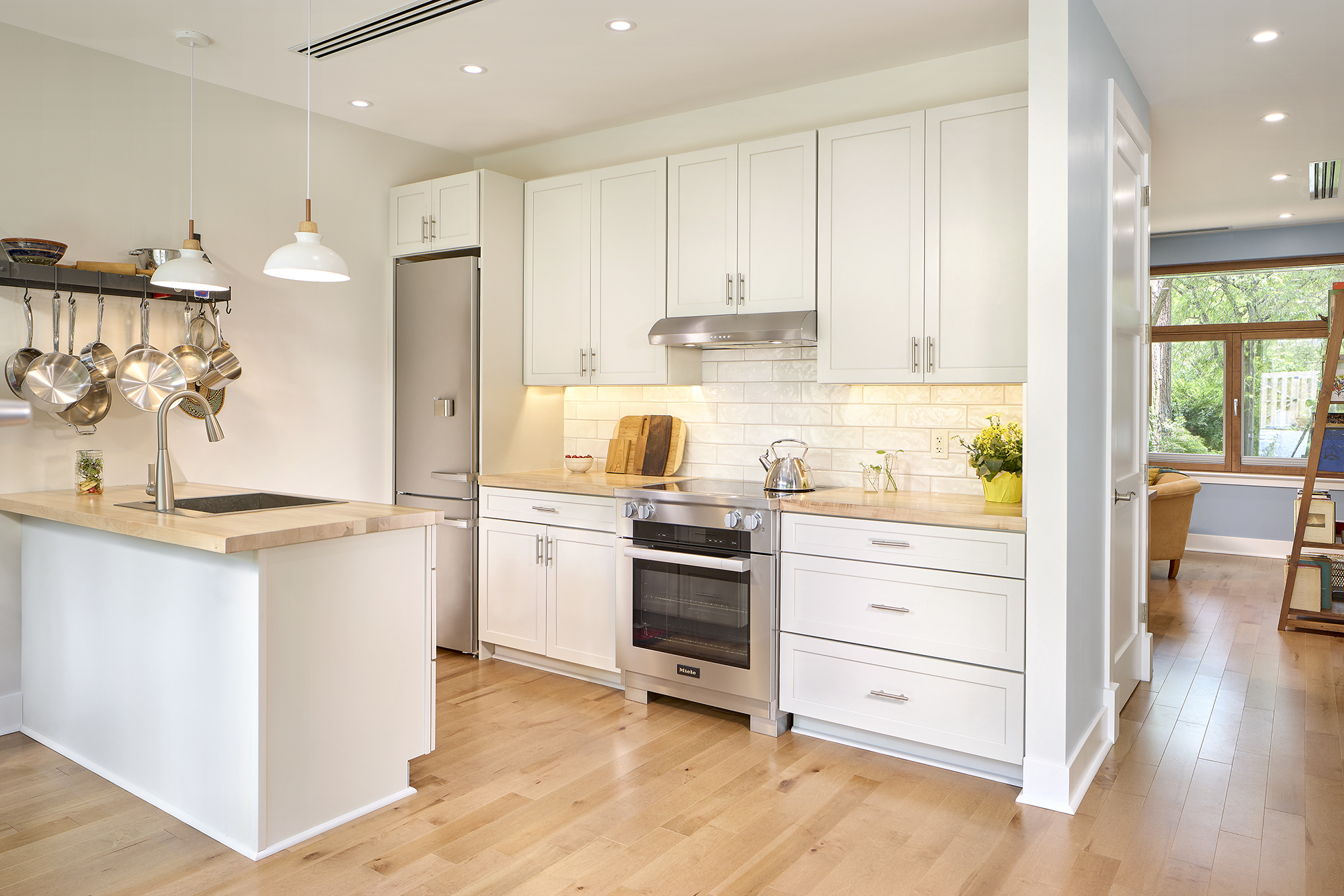
Originally a storefront before becoming a cramped single-story one-bedroom, the 700-squarefoot Wilkinsburg Residence has been transformed into a stylish example of sustainable, healthy architecture. Among its key features are an advanced HVAC system for indoor air quality and all-electric utilities, which bypass the use of fossil fuels.
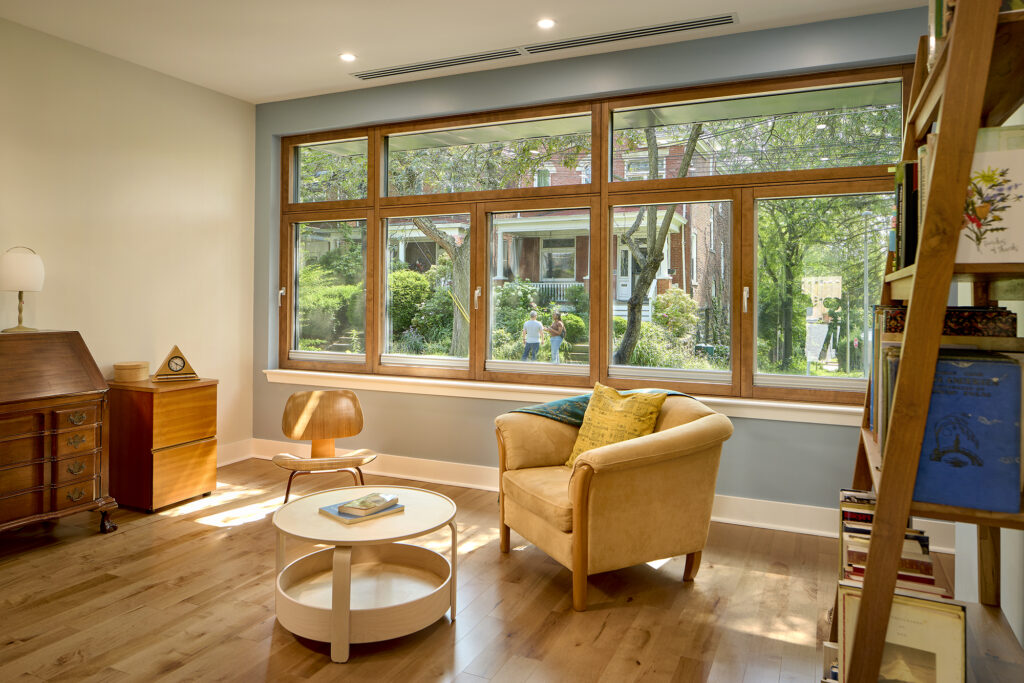
Because it features an energy recovery ventilator (ERV), the system continuously exchanges stale indoor air for filtered fresh air. This active circulation dilutes pollutants, strips out airborne allergens, and manages humidity levels to create an environment where mold cannot thrive. In addition, the Wilkinsburg Residence is designed to maximize natural light. Research has shown that improved indoor air quality can sharpen cognitive function and drive productivity, while extended exposure to daylight improves the well-being and mood of building occupants.
Once a specialized concept imported from Europe, passive houses are becoming more popular in America, where homeowners are beginning to realize the value of decreasing energy consumption and constructing with quality materials. While upfront costs for materials and labor skyrocket throughout the construction industry, a Passive House, with its reduced energy usage, offers significant savings over its lifecycle. Designed to prevent leakage and eliminate drafts and thermal bridges, a passive house requires less energy for heating and cooling. As a result, utility bills are significantly lower than those of standard homes. Over time, these savings on electricity offset the initial costs of design, materials, and construction, making a passive house a sound financial investment.
“With the cost of construction rising every day, there is a real incentive for prospective owners and buyers to invest in homes that promote wellness, and that are energy efficient, allowing them to live more comfortably and to recoup their initial investment over time,” said St. Germain. “If standard construction is expensive, why not design with energy efficiency and occupant health in mind?”
As the first single-family residence to achieve an EnerPHit certification, the Wilkinsburg Residence sets a new standard for existing homes across Pennsylvania based on improving the day-to-day lives of its occupants and the conscious use of energy resources.
share this
Written by Susan Frear